Most buyers who write to us do not open with "find me a factory". They open with a sample on a table, or three quotations in an inbox, and one question: is this the same product?
That question is most of the job. Comparing samples is not a materials catalogue and it is not a lesson in how windows are made. It is a short list of differences that are real, checkable, and that change what you are actually buying — which makes it the fastest way to screen suppliers before anyone places an order.
Two of those comparisons came in recently. Both clients stay anonymous, and so does every factory involved.
Case one: the profile that won on price
A buyer sent two quotations for the same window package. Same series name, same stated wall thickness, same finish. One was priced low enough to take the order on its own.
We asked for a sawn section from each.
Two profiles can carry the same product name and behave completely differently, because the name is a catalogue reference, not a description of what is inside the profile. The difference here was invisible from outside: whether the profile carried an insulated, load-bearing connection between its inside face and its outside face — a thermal break — or was one continuous piece of aluminium from weather to wall.
The lower quotation did not include one.
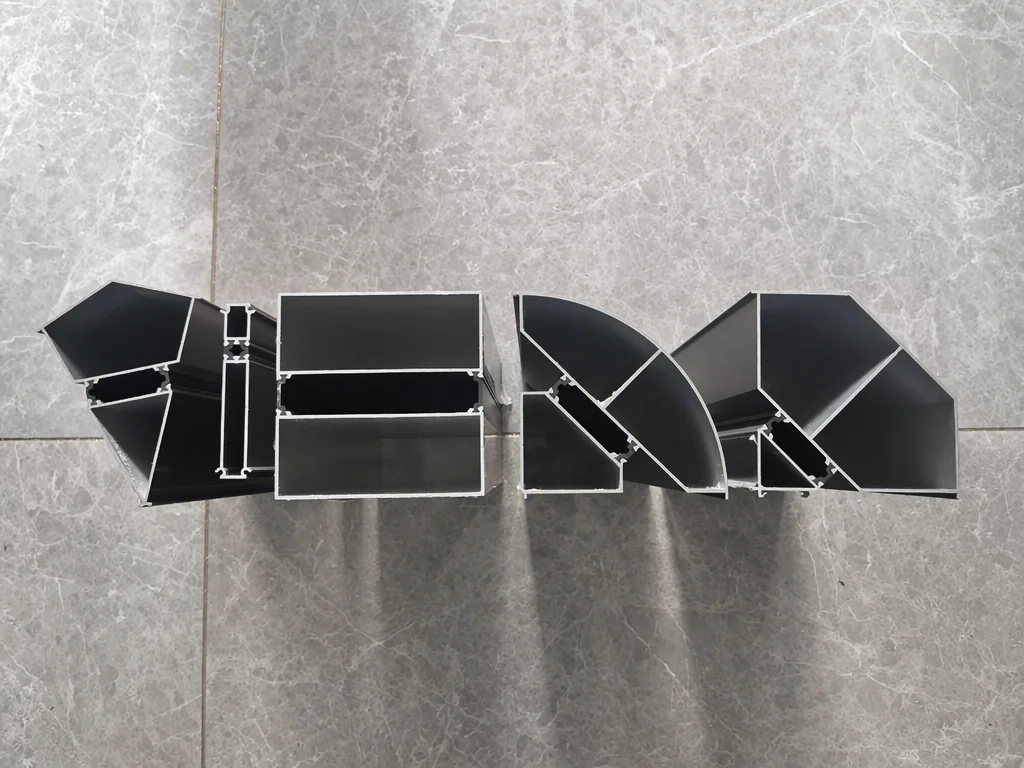
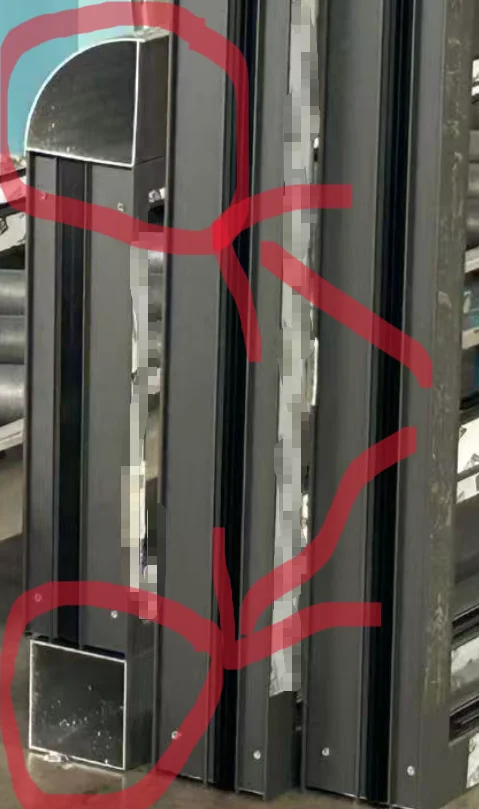
That is the whole case, and it is why a comparison has to end in a cut. A photograph of the elevation, a catalogue page and a price per unit can all be perfectly honest and still tell you nothing about the one part that decides the performance.
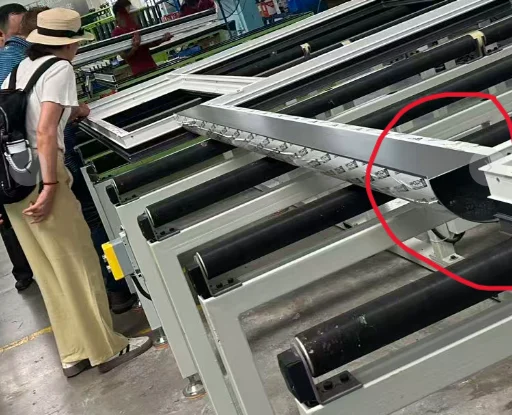
Not a product photograph. The same corner, photographed on the factory floor during a client audit in September — the red circle marks the joint we went there to look at.
Case two: four samples on a table
The second enquiry was a different shape, and it is the more common one. A buyer had collected samples from several suppliers of insulated aluminium roof panels, had them mailed to us, and asked us to screen the suppliers. Not to rank them on price — to find out which of them were making the product the buyer thought they were buying.
Three things separated them.
The core
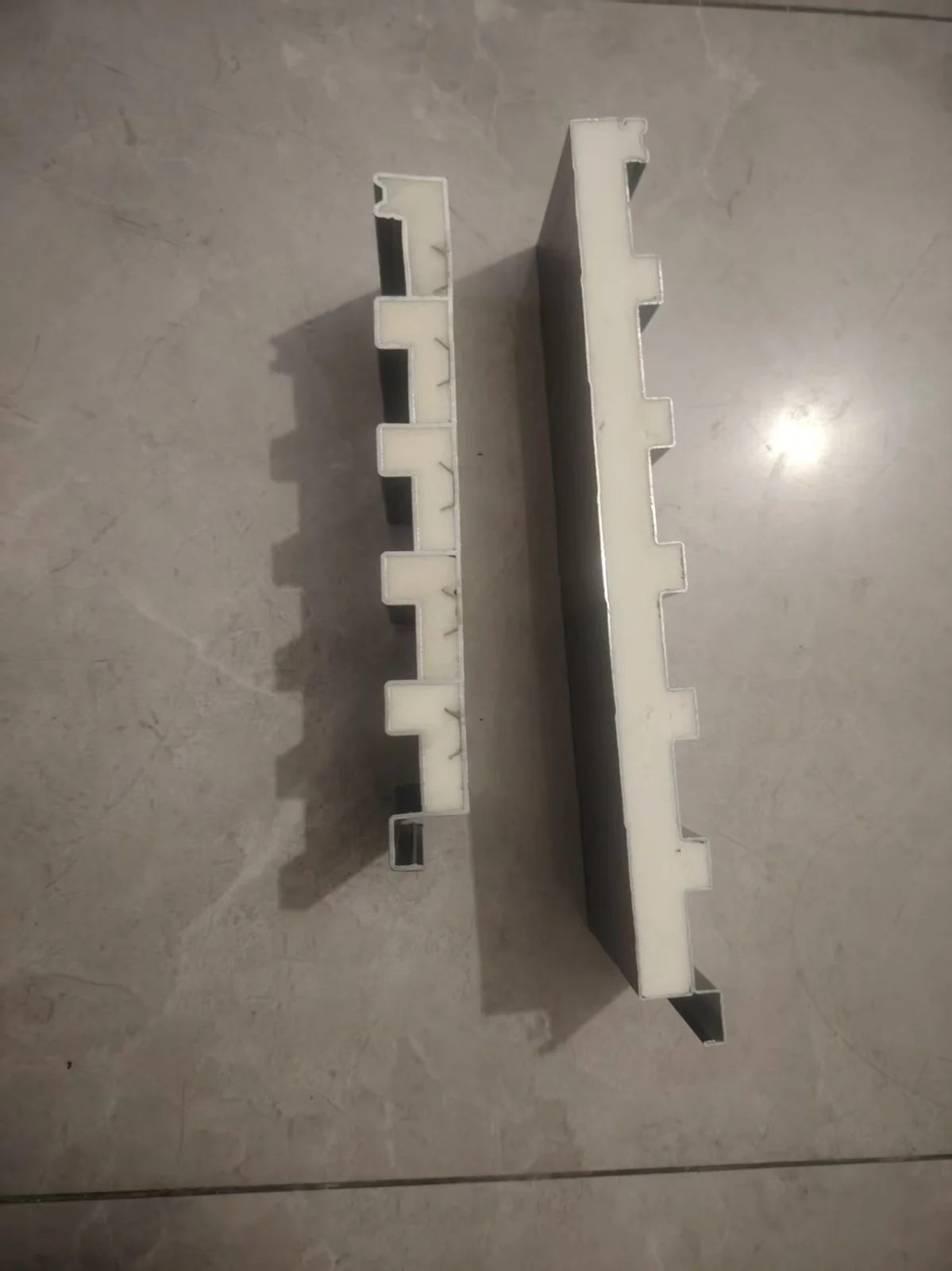
Edge-on, with the core exposed. On one sample the core runs continuously through the section; on the other it is not continuous, and hollow chambers are left unfilled at the end. Nothing on the outside of either panel shows it, and the quotation describes both in the same words.
The profile and the surface
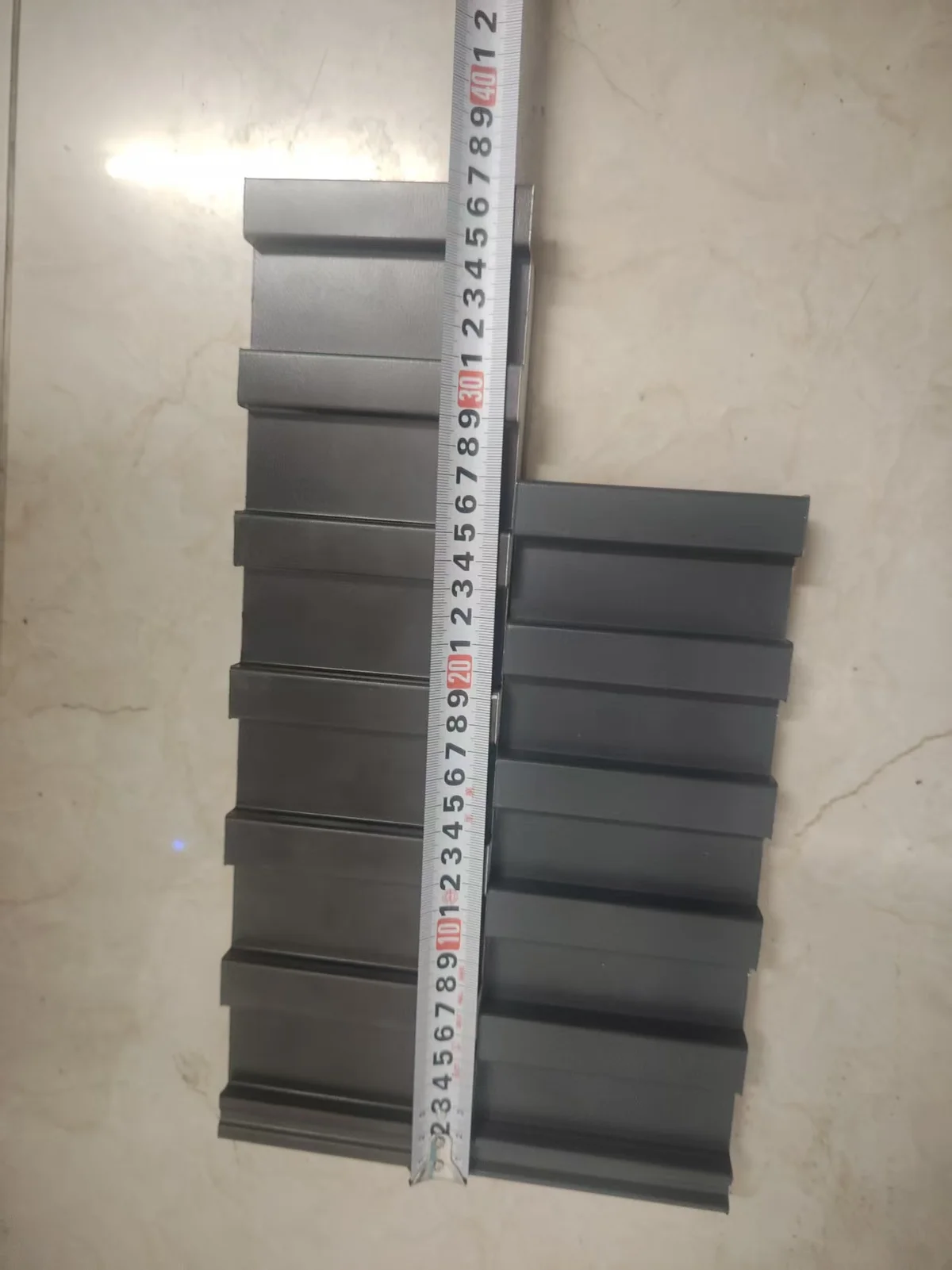
Two suppliers' samples against one tape measure. Stated width and stated length are the first things to check, and the fastest — ten seconds, no cutting, no laboratory.
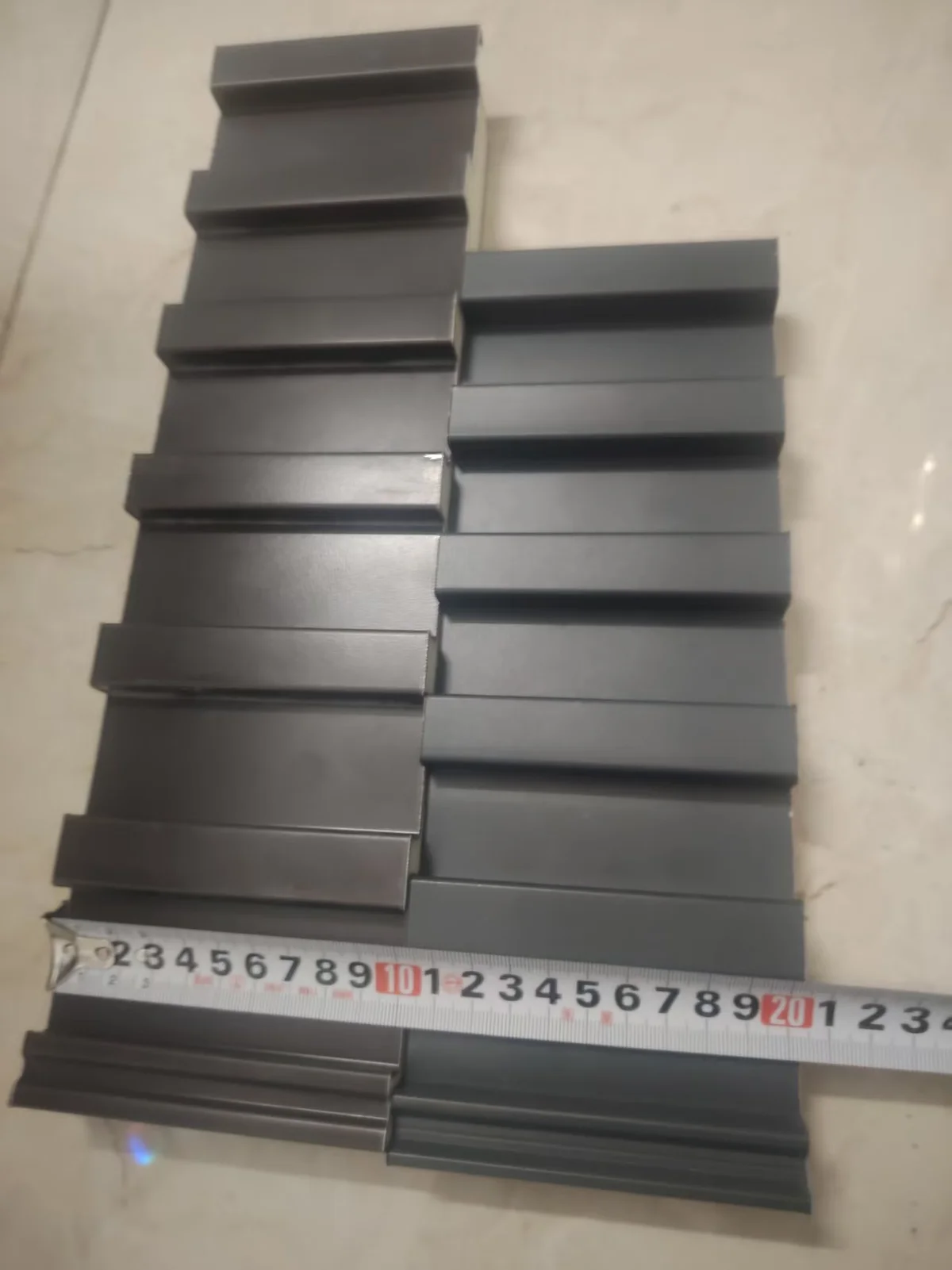
The same pair from the other direction. Two panels sold under the same description do not have to share a profile, and one of these is still carrying its protective film while the other was shipped bare. Neither fact appears anywhere in a quotation.
The scale
Then we weighed them, and that is the part that stopped the room.
The larger sample measured 100 × 370 mm and weighed 0.30 kg with its core in place. The smaller measured 100 × 270 mm and weighed 0.50 kg the same way.
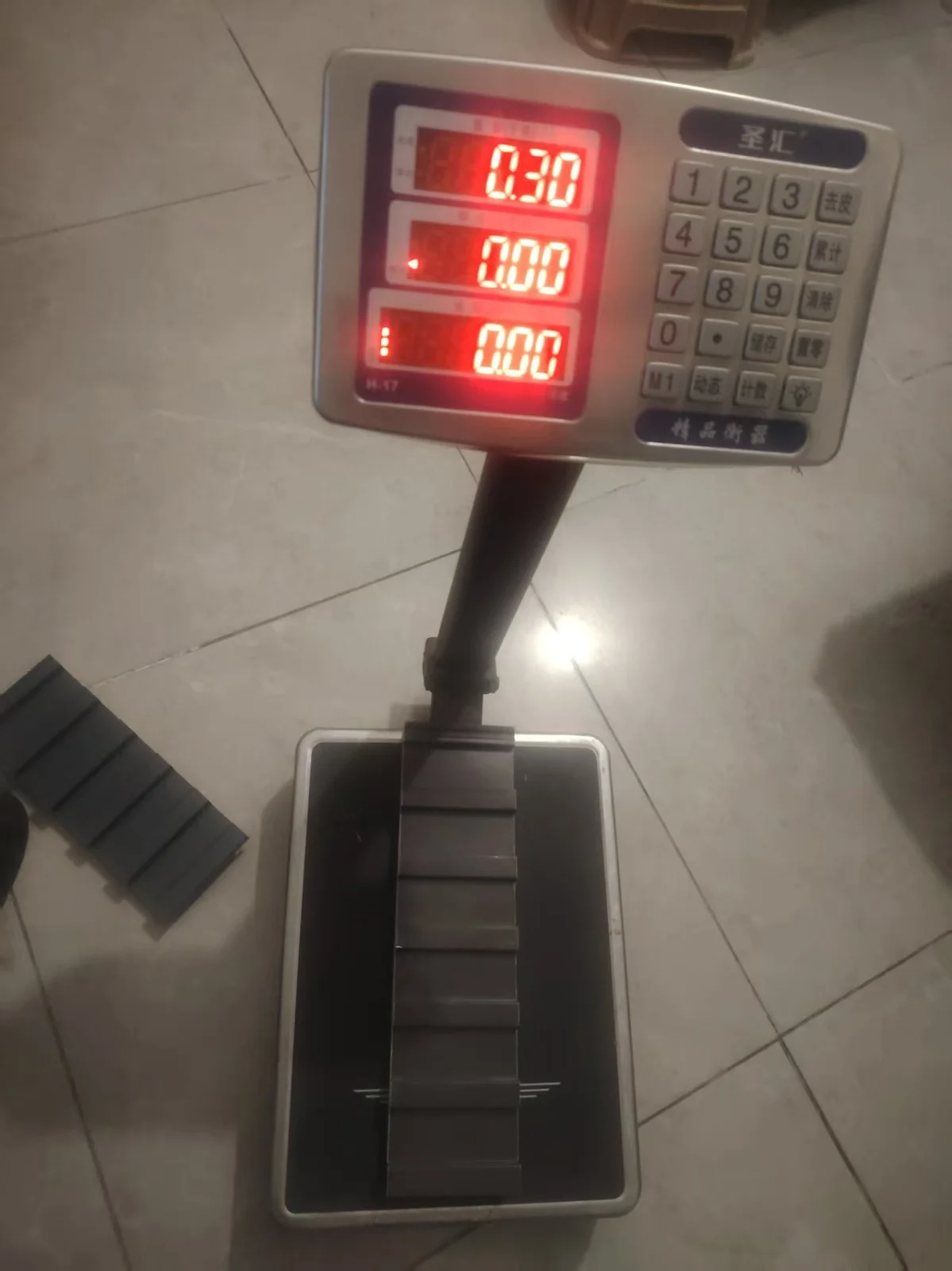
The larger sample, weighed with its core still in place.
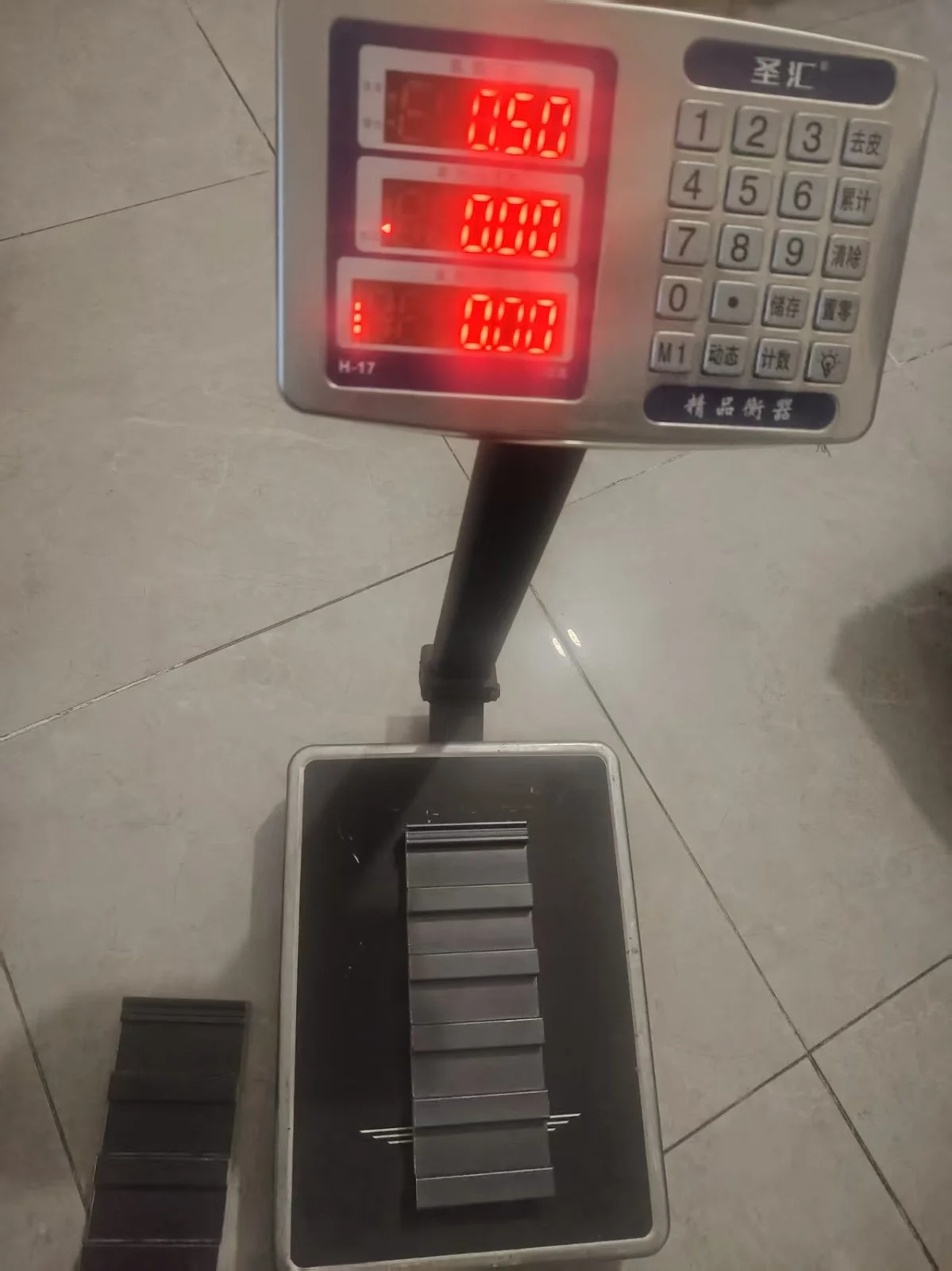
The smaller sample, weighed the same way. Two thirds more weight, from a quarter less panel.
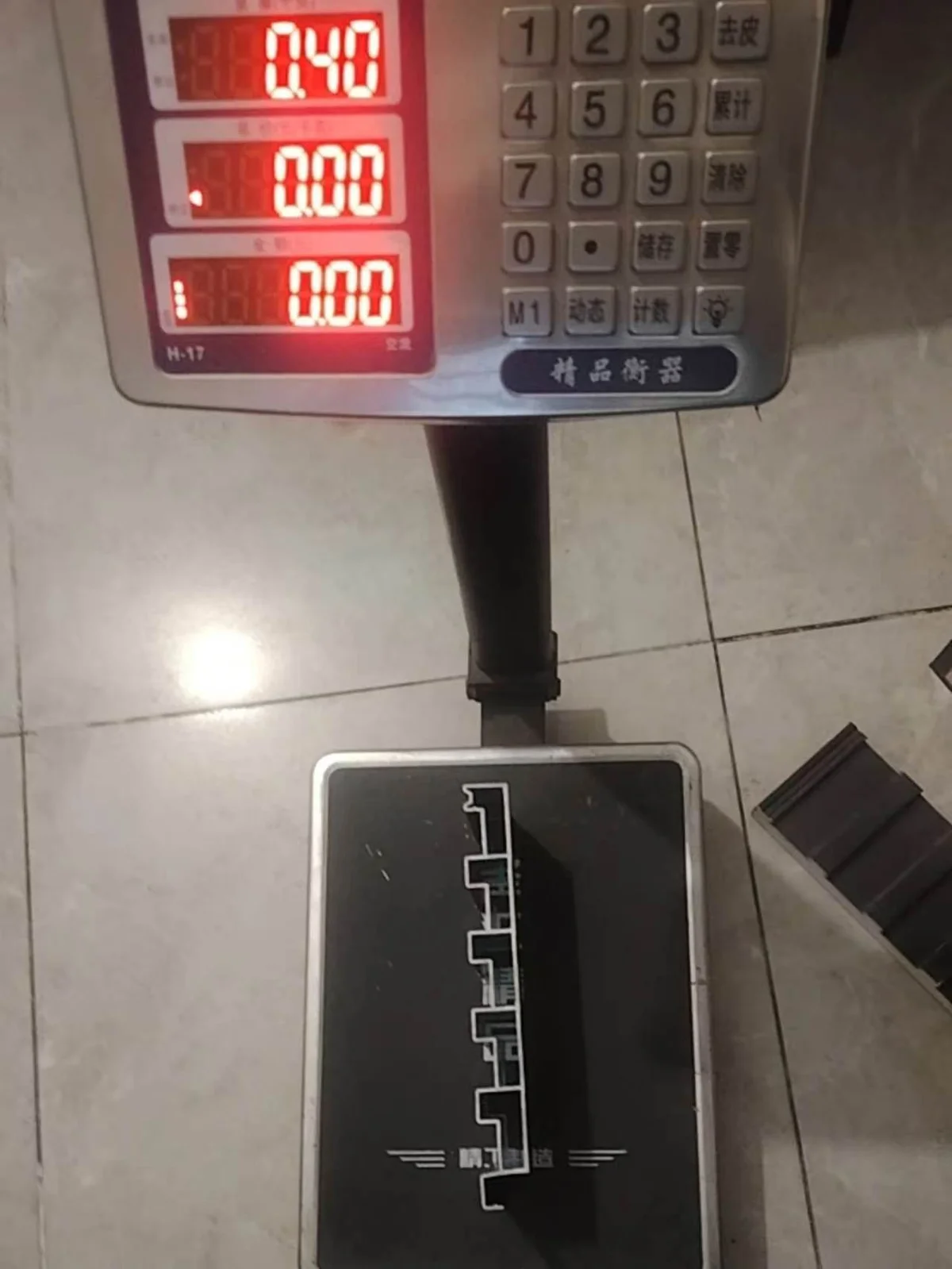
The same small sample with the core stripped out. It still weighs 0.40 kg — so the core was 20% of its weight, and almost everything the scale is measuring is aluminium.
Two numbers, put on the same basis:
| Sample | Area | Weight with core | Per square metre |
|---|---|---|---|
| Larger | 0.037 m² | 0.30 kg | 8.1 kg/m² |
| Smaller | 0.027 m² | 0.50 kg | 18.5 kg/m² |
The panel with 37% more area carried less than half the material in the same square metre. Both were sold as the same product, to the same buyer, and both were quoted by the square metre.
Weight is not a verdict on quality, and it is not a substitute for a specification. Light-weighting can be legitimate — a better core, a more efficient section, a design that does more with less. But where the nominal specification is identical, a weight difference is a material difference, and it is the one measurement that cannot be talked around, because it does not depend on anyone's opinion.
What that means if you are the buyer
Both cases end in the same place: the difference that decides the order is usually invisible from outside, and no quotation is written to show it.
That is the service. You send what you have — a set of drawings, a quotation you are not sure about, a sample a supplier mailed you, or several of each. What comes back is a comparison: what is the same, what is not, what is measurable, and what has to be in writing before you commit.
We do not sell windows, doors or roof panels, and we do not represent any factory. We are paid a fixed fee by the buyer, we take no commission or rebate from any factory, and your payment never passes through us.
What to send
- A quotation, one per supplier, as it stands — even a single price per unit is enough to start.
- The drawings or the opening schedule, if the quotation is for windows or doors.
- A sawn section or a whole sample, mailed to us. Cross-sections, cores and weights are the parts a datasheet cannot argue with.
- The stated specification in writing: series, wall thickness, glass build-up, core material and density, coating.
- Which market the project is in, because the performance basis has to match it — NFRC ratings and U-factor in the United States, CE marking under EN 14351-1 in the EU and the UK, AS 2047 in Australia and New Zealand. A genuine report issued on the wrong basis does not carry over.
You get a written comparison and a list of what to put into the order documents — nothing that asks you to take a photograph on trust. The factory-verification side of the same work is set out in how we verify factories, and the report-reading side in how to verify a window test report.
Frequently asked questions
Isn't this what a third-party inspection company does? Partly. An inspection company checks a consignment against a specification you have already agreed. We work earlier, on the choice itself: which of these suppliers is making the product you think you are buying, and what has to be written down so that the answer stays true in production.
Do you need the samples, or are photographs enough? Photographs get you part of the way — the tape-measure checks here were done from photographs. Sections and weights need the physical sample. Both are worth doing, in that order: the photograph tells you whether the sample is worth mailing.
What if the samples turn out to be identical? That is a useful answer too, and it happens. If two suppliers deliver the same section, the same core and the same weight per square metre, then the decision moves to everything else — documentation, capacity, lead time, and who is still answering your emails in year three. The steps we run in that case are in the sourcing playbook.
Foshan Procurement is a buyer-side technical team in Foshan. We do not sell building materials, we take no commission or rebate from any factory, and your payment goes straight to the factory. If you have samples or a quotation you want read before you commit, send them over — that is our work.