A client sent us samples of insulated aluminium roof panels, mailed to Foshan by several different manufacturers, and asked us to screen the suppliers.
We did the usual: appearance, dimensions, material, workmanship. Then we added one more step — we weighed them.
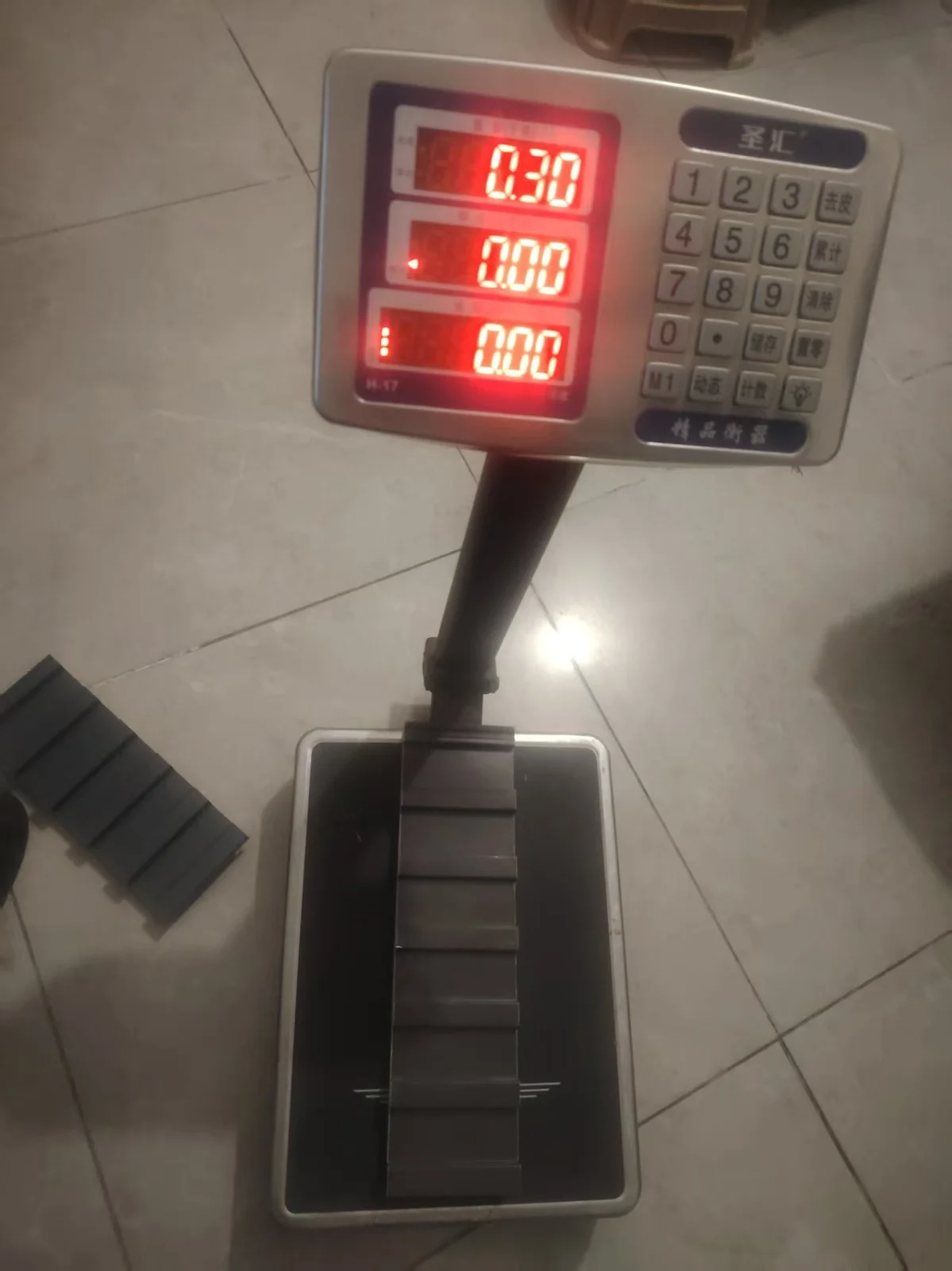
The result stopped everyone in the room. The panel that looked bigger weighed less.
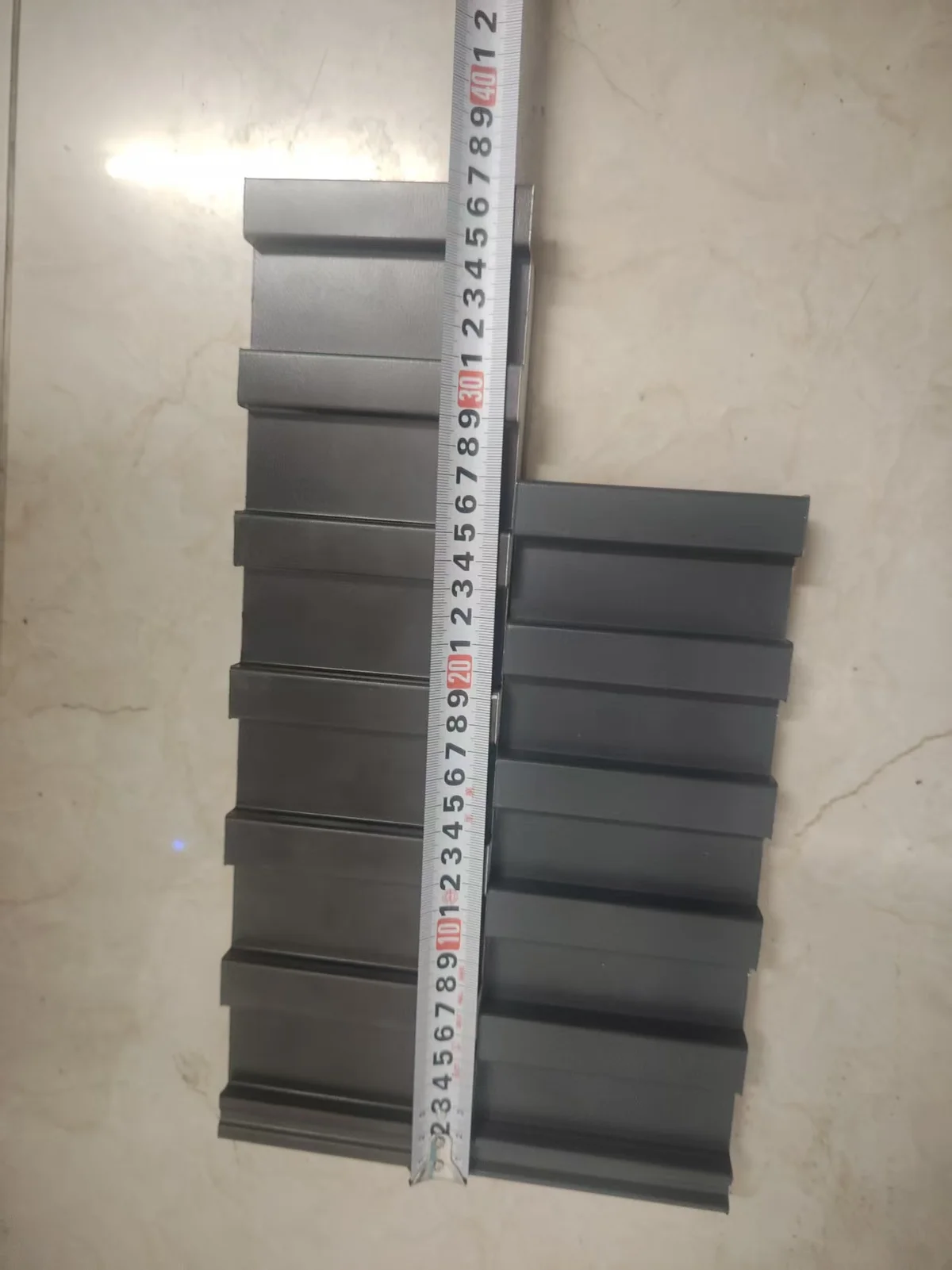
| Sample | Size | Area | With insulation | Without insulation |
|---|---|---|---|---|
| Large | 100 × 370 mm | 0.037 m² | 0.30 kg | — |
| Small | 100 × 270 mm | 0.027 m² | 0.50 kg | 0.40 kg |
Both of those readings are with the insulation core still in place — the large sample at 0.30 kg, the small sample at 0.50 kg:
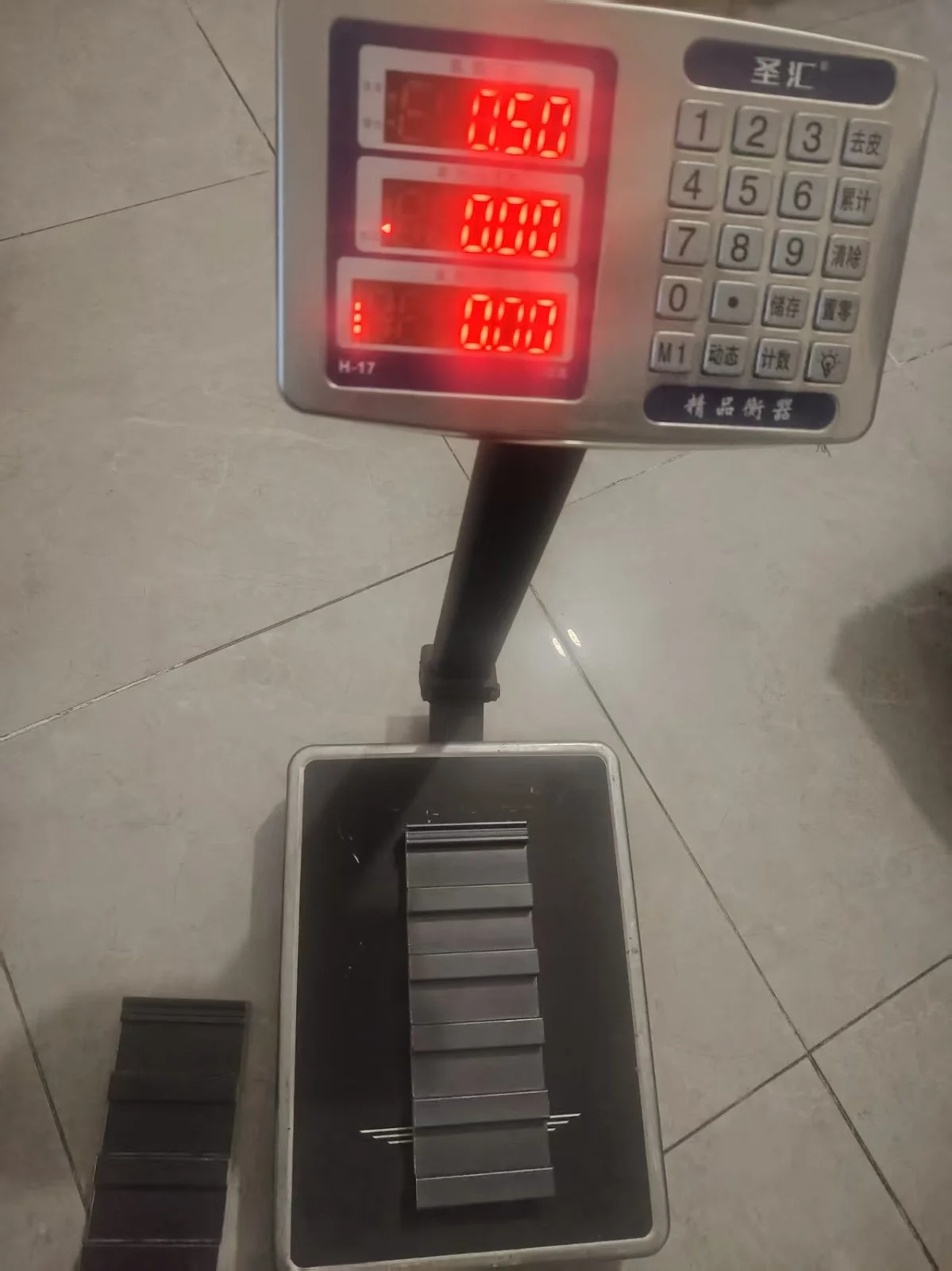
The larger panel had 37% more area and weighed 40% less.
At that point it is only odd. What makes it serious is what happens when you put both on the same area:
| Per square metre (with insulation) | |
|---|---|
| Large | 8.1 kg/m² |
| Small | 18.5 kg/m² |
The same square metre. 56% less material.
THE FIGURE THAT CANNOT BE ARGUED WITH
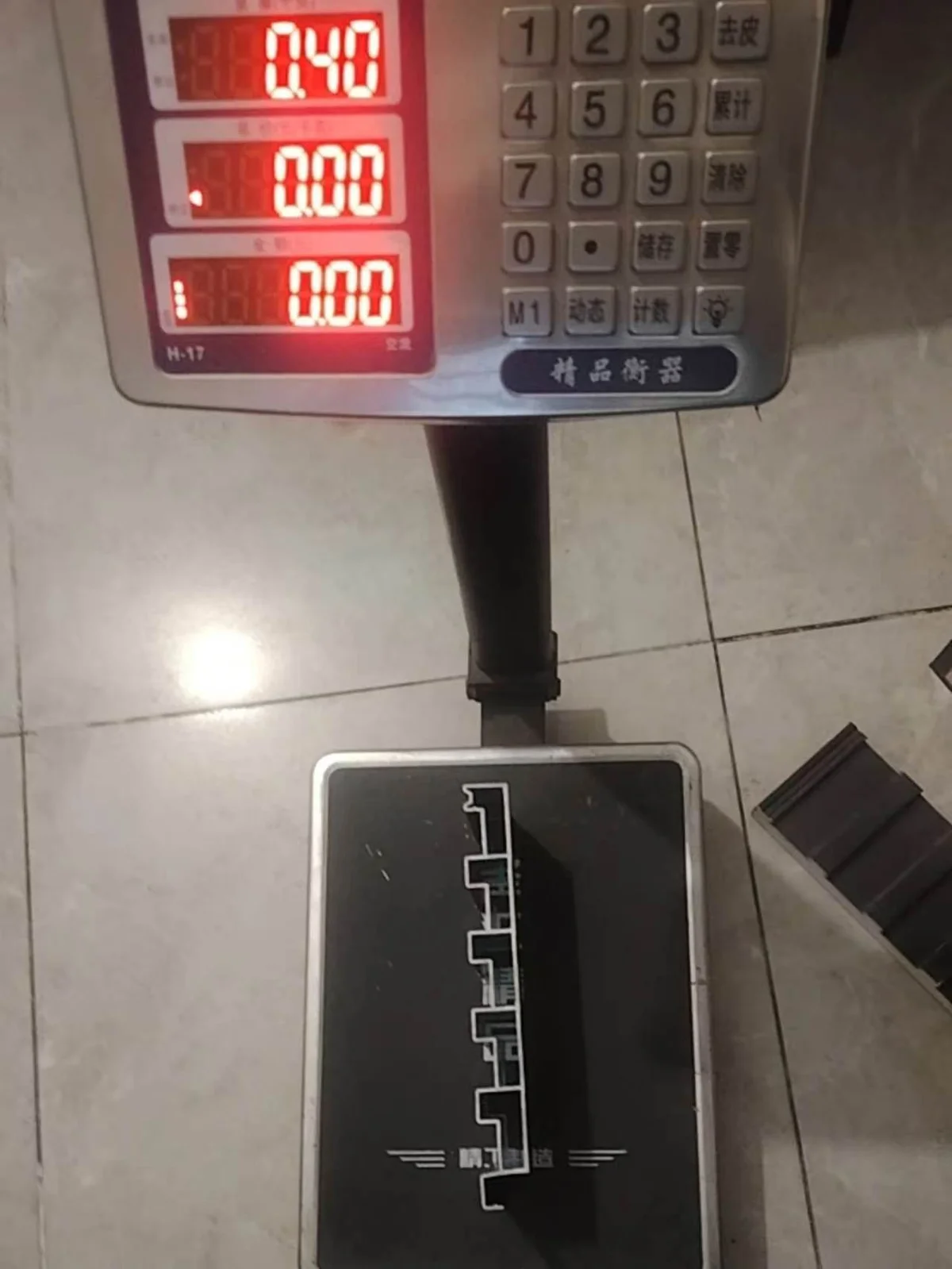
Strip the insulation out of the small sample and it still weighs 0.40 kg — 14.8 kg/m².
The large sample, insulation and all, is 8.1 kg/m².
So even if the insulation in the large panel weighed nothing at all, its aluminium and structure would still be 45% lighter per square metre — and it is 37% bigger.
"THE CORE MUST BE A BETTER, LIGHTER ONE" — THAT EXPLANATION IS CLOSED TOO
The small sample answers it directly: 0.50 kg with the core, 0.40 kg without.
The insulation core is 20% of its own total weight.
Which means the weight of a product like this is not mostly insulation. It is mostly aluminium and structure.
The insulation itself is light. So what the scale is measuring is, almost entirely, aluminium.
WHY "LOOKS BIGGER" AND "MORE MATERIAL" CAN BOTH BE TRUE AT ONCE — AND USUALLY ARE NOT
The cost of an insulated roof panel sits on three things: aluminium, insulation core, coating. Of those three, aluminium is both the most expensive and the densest.
Once that lands, the result explains itself:
One — the aluminium skin is thinner. Raising the profile height and widening the panel costs far less than thickening the skin. Making the shape bigger is cheap. Adding material is expensive.
Two — the core density is lower. The same nominal thickness of polyurethane can be 40 kg/m³, or 30, or less. Appearance, thickness and feel are almost identical.
Three — the core is not as thick as stated. Nominal 50 mm, measured 40 mm. You cannot see it at the edge; the difference is in the middle.
Four — more hollow space. Taller ribs, emptier valleys. Visual volume up, material volume down.
Five — filler in the core. Cheap filler replacing part of the resin. Density and strength fall together, and nothing shows on the outside.
All five of them land on the same measurement: weight.
WHAT WEIGHT CAN PROVE, AND WHAT IT CANNOT
This has to be said, or the article becomes a different kind of misinformation.
Weight alone cannot tell you which product is better. Legitimate light-weighting exists — a better core, a stronger section, a more efficient design.
But where the nominal specification is the same, a weight difference is a material difference.
The dimensions are set by the mould. The cost is set by the material. Those two things can come apart completely.
The client put it better than I did:
"If the two suppliers were matched on size and workmanship, the gap would be far worse."
THE SAME PROBLEM IS MORE COMMON IN WINDOWS AND DOORS — AND HARDER TO CATCH
A roof panel has one advantage: it is simple.
The cost of an insulated roof panel is essentially three layers — top skin, insulation, bottom skin. There are only so many places to hide something.
A window is not like that.
The cost of one window is spread across seven or eight items:
| Cost item | Visible from the outside? |
|---|---|
| Profile wall thickness | No |
| Alloy grade | No |
| Thermal break material (PA66 or PVC) | No |
| Glass build-up (thicknesses, coating, spacer, gas) | No |
| Hardware (brand, material, model) | The brand, maybe. The material grade, no |
| Gasket material | No |
| Corner jointing | No |
| Coating thickness | No |
Every one of those items has a lower grade that looks identical from the outside. And the combinations multiply.
So a roof panel is "one item cut". A window is "seven or eight items, each cut a little".
Each one on its own is still inside tolerance. Together they are a different product.
That is why a window's appearance is easier to disguise than a roof panel's — not because window people cheat more, but because the internal structure is more complex and there is more room to work in.
One thing has to be said clearly: complex is not the same as unverifiable. Every item in that table is measurable. Complex only means there are more points to check — not that they cannot be checked.
TRANSLATING "BOUGHT BY THE SQUARE METRE" INTO "PAID FOR BY MATERIAL"
Roof panels are quoted by the square metre. Windows are quoted by the unit or the square metre. The cost, in both cases, is in the material.
The gap between those two ways of counting is where every problem lives.
Those two samples are the proof in miniature: the large one looked like the better buy, and per square metre it carried 56% less material.
What actually works is to put three numbers side by side: weight per square metre, aluminium skin thickness, and the stated core density.
Once they line up, the price on the quotation turns into something concrete — how many grams of aluminium are in that square metre, what the core density really is and how thick it really is, which grade of coating is on it.
And then you find that the cheaper quote is usually not "the same panel sold cheaper". It is "less material, made into a panel the same size".
THE CONCLUSION
What you paid for, the thing that looked like the obvious advantage — the bigger size, the thicker look, the more substantial feel — its advantage may exist only in the shape.
Looking can deceive you. Measuring can deceive you. Workmanship tells a good story. Weight does not.
That is why, in our factory audits and inspections, alongside looking and measuring, we always add one more step: we weigh it.
NEXT: WE RUN THE SAME TEST ON WINDOWS AND DOORS
This article is really about one plain thing:
When a product is sold by area, check the material by weight.
Windows and doors suit this better than roof panels — because they have a more direct measure than weight per square metre: weight per metre of profile, and wall thickness.
Next, we run the same comparison on windows.
Want to see your own quotation checked first? Send us the drawing or the quote, and we will take it apart, part by part.
Foshan Procurement — a buyer-side team in Foshan. We do not sell building materials, we take no commission or rebate from any factory, and your payment goes straight to the factory. We write your specification part by part, then check that what ships is what you signed off.